
Psagot Alternative
Offers a variety of advanced alternative investment solutions in various fields including debt funds, real estate funds and structured products for institutional and qualified investors.
The variety of the company’s products allow investors to diversify their investment portfolio and join the global investment trend with investments that have limited exposure to the capital markets.
About
The leading team of Psagot Alternative consists of professionals with rich financial experience. The accumulated knowledge and experience of the management team constitute a significant added value for groundbreaking collaborations in Israel and abroad alongside White Label transactions for institutional investors, corporations and qualified investors.
The vision of Psagot Alternative is to provide access to unique investment products to Israeli investors and create real value for them.
As part of risk management while looking to achieve excess returns, we believe that the client’s investment portfolio should be spread between financial components directly related to the capital market, and products that have a low correlation to the capital market or none at all.
Meet the team
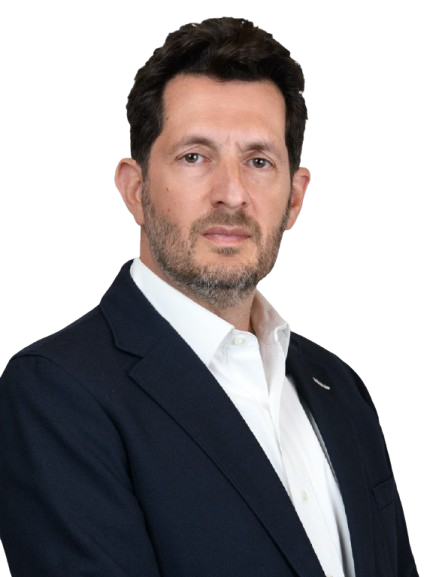
Has almost 30 years of experience in the world of investments, finance and real estate.
Daniel is a CPA and has a LLM degree in law.
Serves as Chairman and CEO of Psagot Group for Financial and Investments, a public company, one of the largest and oldest investment houses in Israel.
Served as CEO of the public real estate company, Mishorim Real Estate Investments and before that served as CFO and deputy CEO of investment houses in Israel and public and private real estate companies.
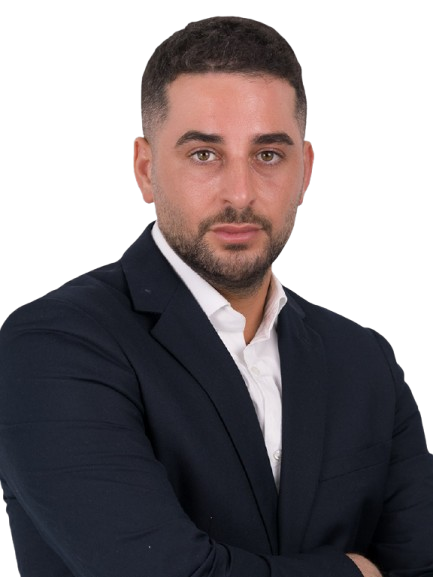

Yahalomit has over 15 years of experience in senior management positions, mainly in global companies as well as in the banking system in the foreign securities department.
She has a bachelor’s degree in management and a master’s degree in consulting and organizational development from the College of Management
Our Products
Psagot Kilgour Williams Business Credit Fund
The fund was the first fund available to the Israeli qualified investors, offering the possibility to invest in short term loans to small businesses in the USA.
The fund was established in cooperation with the investment house Kilgour Williams Capital – a firm that specializes in the tradable and non-tradable debt market.
The fund grants short-term loans to small businesses with a high credit rating in the US, in a very wide spread of businesses and across the entire US, while the geographical and business diversification significantly lowers the risk for investors.
The fund is measured monthly, liquid (with an advance notice) and has an ISIN.
The fund has been active since 2018 and has proven success even during challenging periods such as 2020-2021 (COVID) and 2022-2023 (increasing interest rates).

Kilgour Williams Capital
Kilgour Williams Capital
Kilgour Williams Capital (“KWC”) was founded by two senior Canadian credit experts. Colin Kilgour and Daniel Williams have decades of leadership in credit risk management, portfolio management and structuring. The KWC team has extensive experience gained at leading investment managers, banks, and accounting firms from around the world.

Daniel Williams
Prior to joining, Daniel was the Chief Investment Officer of Dundee Bank of Canada. He has been working as a KWC principal since inception. From 2001 to 2006, he was the Head of Credit Portfolio Management for National Bank of Canada where he had oversight to maximize the risk-adjusted return on the bank’s $4 billion portfolios of corporate loans. Dan established the bank’s centralized Credit Portfolio Management function and sat on the Deals Committee, which reviewed and adjudicated every corporate loan. New measurements of bank-wide loan value were introduced and advanced portfolio-level risk models were implemented to identify industry and geographic risks, which were then hedged using credit derivatives.

Colin Kilgour
Colin Kilgour has been active in the Canadian credit and structured finance market on a full time and continuous basis since 2001. At that time, Colin co-founded a company called Efficient Capital Corporation (ECC), which provided accounts receivable financing to corporations and funded that credit through a commercial paper conduit which ECC administered. ECC was sold in 2006 and the ECC conduit was one of the very few non-bank ABCP issuers was not affected by the market disruption in 2007. He founded the predecessor firm of KWC in 2007.
Why invest in small businesses in the US ?
The American economy is the foundation for the world economy, and it relies to a significant extent on small and medium-sized businesses which are one of the pillars of the economic growth in the United States.
Workforce – about 60 million people are employed in small businesses, which make up about 47.1% of the US workforce
Engine of growth – small businesses are an engine of growth and are responsible for 44% of economic activity in the US
Small businesses – in 2022 there were approximately 31.7 million small businesses in the US
Job creation – based on the data of the American Bureau of Labor BLS, in the last decade, small businesses created about 8.9 million new jobs in a variety of industries.
Entrepreneurship – Small businesses are the source of entrepreneurship in the US and are a significant factor in economic success.
Credit Policy in the US
Credit policy in the US is unlike what we know from our districts in Israel, and it makes it very difficult for small businesses, which do not have significant tangible assets that can be used as collateral such as real estate, equipment, etc. the process is characterized by bureaucracy, regulation and a long and tedious underwriting procedure.
Bureaucracy and regulation – small businesses often encounter obstacles when it comes to traditional financing by the banks and therefore in recent years, another market for financing has developed in the US and has become a semi-traditional financing channel.
Debt funds that specialize in loans to small businesses – bridging the gap created between the need for financing by small businesses for growth, and the banks and traditional financing bodies. By using digital credit platforms, the small businesses can finance themselves for the growth of their business, in an efficient procedure, with quality underwriting based on the personal guarantee of the business owner and his credit rating, alongside collateral as a lien of the borrowing business, the business cash flow lien and more.
Traditional world and new world – unlike traditional banking institutions, debt funds offer a unique investment proposal that goes beyond financial support only, as they operate according to a model that combines flexibility, diversification and risk management strategies adapted to investors in the fund, by using quantitative technological means in proprietary models and manual credit underwriting used to quantify the quality of credit in the fund and cherry picking loan selection.
Our Partners

E&Y קוסט פורר
And tax services

Vinograd & Co
Israel

APEX group

Walkers
Cayman

Q&A
Who can invest in Psagot Alternative ?
Eligible investors. In accordance with the Securities Law of 2018 – 1968. An investor will be considered a qualified investor, among others, in the following cases:
• ‘asset value test’ – the total value of the liquid assets I own exceeds NIS 8.3 million (as will be linked to the index from time to time)
• ‘income level test‘ – my income in each of the last two years exceeds NIS 1.25 million (as will be linked to the index from time to time per time) or, the income of the family unit to which I belong exceeds 1.88 million NIS (as will be attached to the index from time to time)
• The ‘combined test’ – the total value of the liquid assets I own exceeds 5.2 million NIS (as will be attached to the index from time to time at the time) and my income in each of the last two years exceeds NIS 627,313 (as will be linked to the index from time to time) or the aforementioned amount of income of the family unit to which I belong exceeds NIS 940,969 (as will be linked to the index from time to time)
What are Alternative investments ?
Low correlation to the capital markets:
Alternative investments have a low correlation to traditional assets in the capital markets such as stocks and bonds
Unique investment opportunities:
Alternative investments provide unique investment opportunities that are not available in many cases in traditional assets
Low Volatility:
Alternative investments make it possible to manage investments with low volatility
Access to illiquid investments:
Alternative investments provide access to unique investments that are not usually accessible to all investors.
Real estate is one of the most popular alternative asset class in the world and represents about 33% of the total alternative investments in the world.
The total alternative investments in the world amounted to 14.4 trillion dollars in 2022
Source: Preqin


